
The edge comes first
A beautiful knife that cannot cut is a decoration. Every decision in the workshop starts with how the blade meets food and how long it stays sharp.
The workshop · Since 1949
Three generations of bladesmiths, one sequence of steps, and a refusal to rush the last ten minutes. This is the story behind every Imarku knife.
The beginning
Imarku began in 1949, in a Japanese family workshop where knives were forged one at a time. The founders were master bladesmiths, and the standard was simple: a knife should leave the bench sharper than the one before it.
The family still works to the same sequence. Steel is folded fifteen times, bringing the billet to 32,768 layers. The blade is coated in clay before the quench, so the edge hardens first and the spine stays tough. Then it is ground thin, honed at fifteen degrees and polished by hand.
In 2016 the workshop crossed to the United States. The knives, the process and the family came with it. Orders now ship from Pomona, California, and the people answering your warranty question work in the same building as the people who inspect the knives.
The timeline
Not every brand can point to a bench that has been in use for more than seventy years. We can. The dates below are the ones that changed the workshop, not the ones that changed a logo.
1949
Japan
The first Imarku blades are forged by a family of master bladesmiths. One forge, one bench, and a process that would stay recognisable for the next seven decades.
2016
United States
Imarku arrives in California and opens in Pomona. The knives, the standards and the family come with the name. Shipping, warranty and customer care move under one roof.
Now
Direct
This is the official Imarku Knives website. Every order placed here is fulfilled by our team, registered to our warranty and supported by the people who know the product.
The finish
Grinding makes a shape. Honing makes a knife. The edge is set by hand at fifteen degrees, then polished on a 3000-grit stone until it slices a ripe tomato under its own weight.
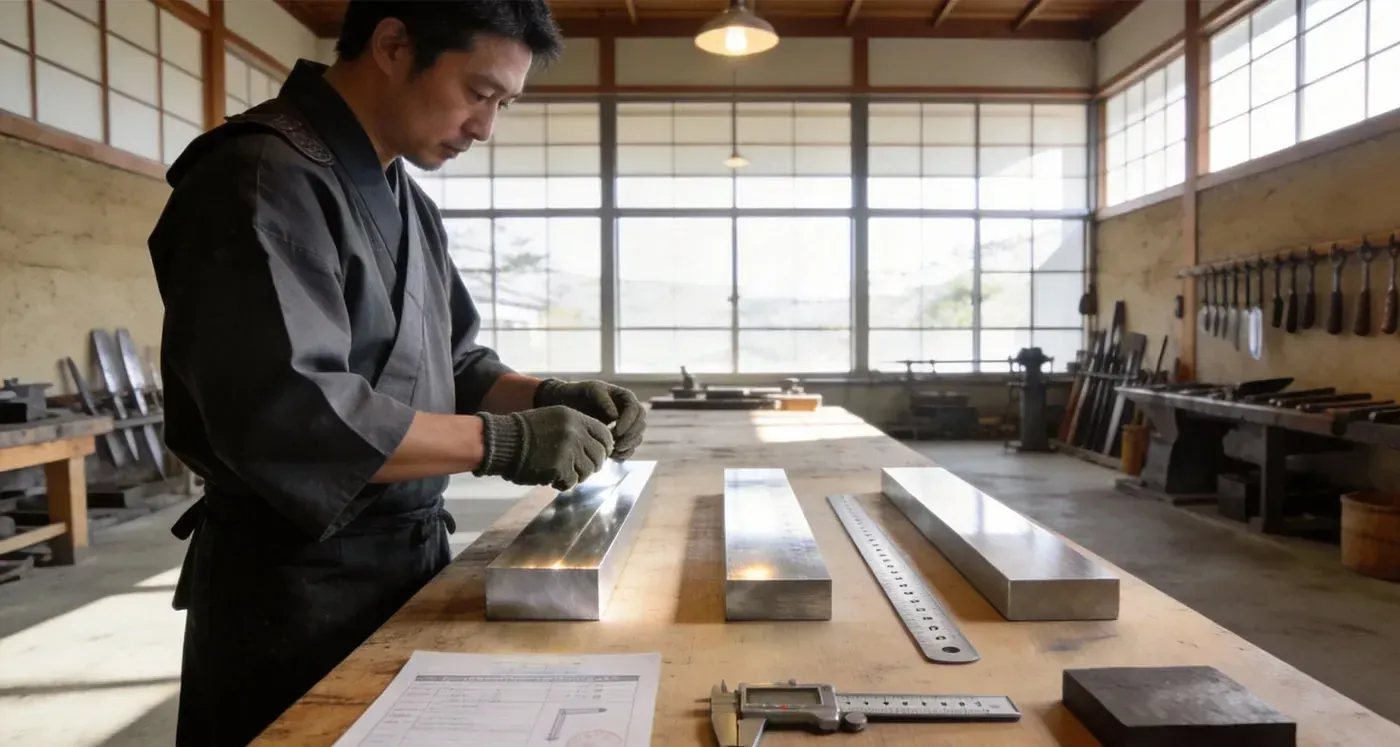
Hand honing15° · 3000 grit
The grind
A knife that cuts well is thin where it meets food and supported where it meets force. Our blades are ground to that balance, then checked by hand under light before they move to the handle bench.
The stone
The final edge is polished on a fine stone. It takes longer than running a blade through a machine. It also leaves an edge that cuts cleanly instead of tearing, and a bevel you can maintain at home.
The handle
Handles are shaped to a working grip, sanded smooth and sealed against water. The blade is fitted full-tang where the series calls for it, so the balance sits forward of the hand, not in it.
Every Imarku knife carries a one-year warranty and a 30-day return window. If something is wrong with the edge when it arrives, we want to hear about it before you sharpen it.
What we stand behind
A beautiful knife that cannot cut is a decoration. Every decision in the workshop starts with how the blade meets food and how long it stays sharp.
Materials, construction and workmanship are covered for a year. Normal edge wear is not a defect, but a cracked handle or a failed weld is our problem to solve.
You buy from Imarku, not from a reseller guessing at the spec. Warranty, returns and product questions are handled by the team that ships the knife.
See the collection
Free US shipping over $100
30-day returns · 1-year warranty